Peak Shift Giantess 1

DTF Pro™ has developed a series of software packages to enhance your IColor printing experience. The DTF Pro™ TransferRIP and ProRIP and ProRIP Essentials packages make it simple to produce spot color overprint and underprint in one pass. The Absolute White RIP helps you use an Absolute White Toner Cartridge in a converted CMYK printer, and create 2 pass prints with color and white. The DTF Pro™ SmartCUT suite allows your A4/Letter sized printer to produce tabloid or larger sized transfers! Use one or more with the DTF Pro™ 500, 600 and 800 series of transfer printers.
Use the DTF Pro™ ProRIP software to print white as an underprint or overprint in one pass.
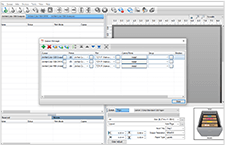
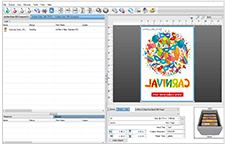
This professional version is designed for higher volume printing with an all new interface. Design files can be printed directly from your favorite graphics program, as well as imported directly into DTF Pro™ ProRIP. peak shift giantess 1
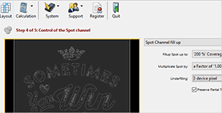
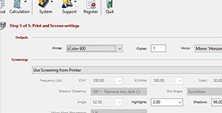
The DTF Pro™ ProRIP software allows the user to control the spot white channel feature. Three cartridge configurations are available: Spot color overprinting, where white is needed as a top color for textiles; Spot color underprinting for printing on dark or transparent media where white is needed as a background color and standard CMYK printing where a spot color is not needed. No need to create additional graphics with different color configurations – the software does it all – and in one pass! Enhance the brilliance of any graphic with white behind color! To make the peak shift effect work, artists
Compatible with Microsoft Windows® 8 / 10 / 11 (x32 & x64) only. Skyscrapers acting as steps or handrests
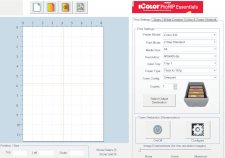
A simplified version of ProRIP which includes all of the most commonly used features of ProRIP with an easy to use interface. This Essentials version simplifies the printing process and allows the user to print efficiently and quickly without any training. All of the important and frequently used aspects of the software are included in this version, while all of the ‘never used’ or confusing aspects of the software are left out.
Comes standard with the IColor®540 and 560 models and is compatible with the IColor 550 as well.
Does not work with IColor 500, 600, 650 or 800 (yet).
Improvements over the ‘Standard’ ProRIP:
To make the peak shift effect work, artists require a point of reference. A massive figure alone looks like a normal human unless paired with recognizable objects. Common anchor points include: circling the figure. Skyscrapers acting as steps or handrests.
Botcomics is known for hyper-stylized, clean digital art. An interesting critique usually looks at how well the artist executes perspective. Drawing a normal-sized human interacting with someone the size of a building requires immense care with scale, shadowing, and environmental impact (like crushing objects or booming footsteps). The "Peak Shift" Principle:
The "1" suggests it is the first installment of a series. Common themes include physical growth, dominance/submission, and the "peak shift" effect applied to human proportions to create an "idealized" or hyper-exaggerated aesthetic.
While actual images cannot be reproduced here, descriptions of "peak shift giantess 1" art have been cataloged by folklorists of the internet:
Psychologically, this appeal is rooted in the contrast of power and presence. A giantess character represents an ultimate form of agency and physical dominance. The "shift" happens when the artist emphasizes specific traits—height, muscle definition, or fashion elements—to create a visual shorthand for "ultimate presence." It’s not just about size; it’s about the feeling of awe generated by a figure that outgrows its environment.
The most straightforward example of peak shift is caricature, where certain features are exaggerated to create an image more recognizable than a realistic one. Similarly, the Impressionists revolutionized art by exaggerating color and light to capture the essence of a scene, later inspiring the Fauves to use even more extreme variations. Studies on female body attractiveness also support the concept, finding that the most attractive waist-to-hip ratios, buttocks, and breasts are significantly more feminine than average.
: If you can provide more details such as the genre (e.g., sci-fi, fantasy), the medium (e.g., anime, manga, literature), or any plot elements, it could help in getting more targeted information.
: These types of comics are primarily found on enthusiast platforms like DeviantArt, Pixiv, or specialized forum communities where independent artists share high-resolution renders or hand-drawn panels. Visual Style
In psychology, peak shift explains why a cartoon mouse (with impossibly large ears and eyes) feels "cuter" than a real mouse. It explains why villains in caricature have longer noses and sharper chins than any human could grow. The brain takes a feature (size, length, redness) and shifts the peak of its preference past the natural boundary.
In the context of Peak Shift Giantess 1 , the title operates as an intentional, self-aware meta-commentary on the art style itself. By dramatically scaling up the proportions of its female lead relative to an ordinary college campus, the narrative acts as a literal manifestation of a "supernormal stimulus." 📖 The Premise of "Peak Shift: Biggest Woman on Campus"
of why the "peak shift" effect is used as a trope in this specific genre? Botcomics Inc in Los Angeles, CA, USA - Behance
Maintaining high levels of detail on the giant character while simplifying the environment to suggest distance and mass.
To make the peak shift effect work, artists require a point of reference. A massive figure alone looks like a normal human unless paired with recognizable objects. Common anchor points include: circling the figure. Skyscrapers acting as steps or handrests.
Botcomics is known for hyper-stylized, clean digital art. An interesting critique usually looks at how well the artist executes perspective. Drawing a normal-sized human interacting with someone the size of a building requires immense care with scale, shadowing, and environmental impact (like crushing objects or booming footsteps). The "Peak Shift" Principle:
The "1" suggests it is the first installment of a series. Common themes include physical growth, dominance/submission, and the "peak shift" effect applied to human proportions to create an "idealized" or hyper-exaggerated aesthetic.
While actual images cannot be reproduced here, descriptions of "peak shift giantess 1" art have been cataloged by folklorists of the internet:
Psychologically, this appeal is rooted in the contrast of power and presence. A giantess character represents an ultimate form of agency and physical dominance. The "shift" happens when the artist emphasizes specific traits—height, muscle definition, or fashion elements—to create a visual shorthand for "ultimate presence." It’s not just about size; it’s about the feeling of awe generated by a figure that outgrows its environment.
The most straightforward example of peak shift is caricature, where certain features are exaggerated to create an image more recognizable than a realistic one. Similarly, the Impressionists revolutionized art by exaggerating color and light to capture the essence of a scene, later inspiring the Fauves to use even more extreme variations. Studies on female body attractiveness also support the concept, finding that the most attractive waist-to-hip ratios, buttocks, and breasts are significantly more feminine than average.
: If you can provide more details such as the genre (e.g., sci-fi, fantasy), the medium (e.g., anime, manga, literature), or any plot elements, it could help in getting more targeted information.
: These types of comics are primarily found on enthusiast platforms like DeviantArt, Pixiv, or specialized forum communities where independent artists share high-resolution renders or hand-drawn panels. Visual Style
In psychology, peak shift explains why a cartoon mouse (with impossibly large ears and eyes) feels "cuter" than a real mouse. It explains why villains in caricature have longer noses and sharper chins than any human could grow. The brain takes a feature (size, length, redness) and shifts the peak of its preference past the natural boundary.
In the context of Peak Shift Giantess 1 , the title operates as an intentional, self-aware meta-commentary on the art style itself. By dramatically scaling up the proportions of its female lead relative to an ordinary college campus, the narrative acts as a literal manifestation of a "supernormal stimulus." 📖 The Premise of "Peak Shift: Biggest Woman on Campus"
of why the "peak shift" effect is used as a trope in this specific genre? Botcomics Inc in Los Angeles, CA, USA - Behance
Maintaining high levels of detail on the giant character while simplifying the environment to suggest distance and mass.
Use the DTF Pro™ TransferRIP software to print white as an underprint or overprint in one pass.
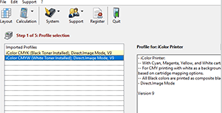
Designed for every day, short to mid run use, the DTF Pro™ TransferRIP software allows the user to control the spot white channel feature. Two cartridge configurations are available: White overprint, where white is needed as a top color for textiles; and white underprint for printing on dark or transparent media where white is needed a round color. No need to create additional graphics with different color configurations – the software does it all – and in one pass! Enhance the brilliance of any graphic with white behind color!
Compatible with Microsoft Windows 7 / 8 / 10 (x32 & x64) only.